Who it is for
For anyone whose impulse spending, forgotten subscriptions, and ADHD tax demand finances that run on automation—not willpower—even when executive function doesn't show up.
Impulse spending, forgotten subscriptions, and the ADHD tax: automation-first finances that keep working even when executive function doesn't.
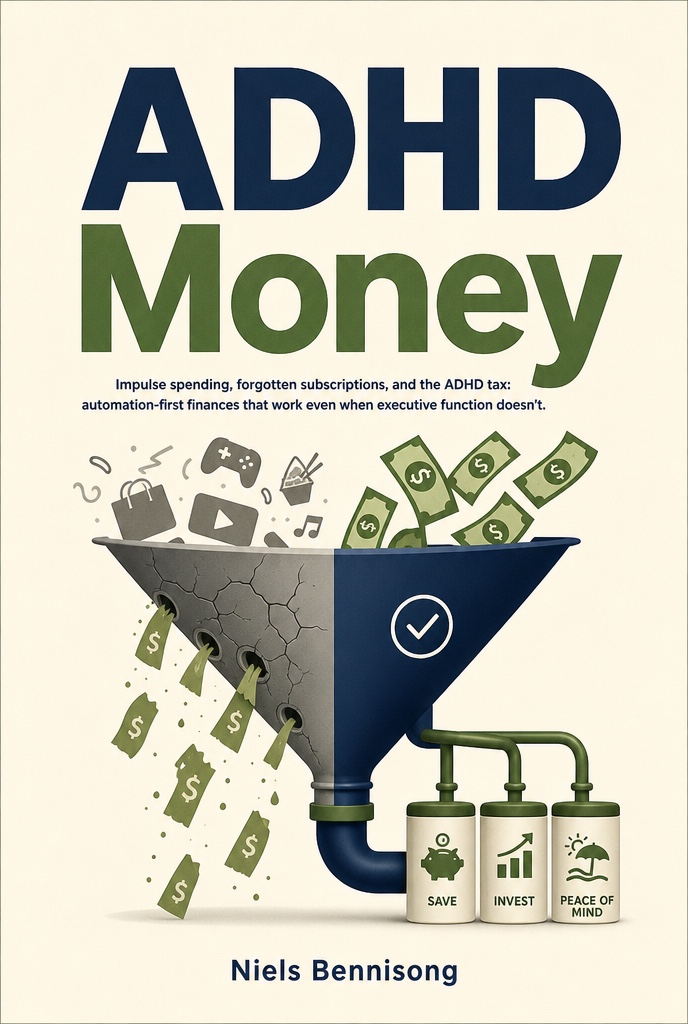
You bought something at 11 p.m. that you didn't need. A late fee hit an account that had the money sitting in it the whole time. It all rests on one claim you have to accept first: your money problems are mechanical, not moral.
Eleven o'clock on a Tuesday, three weeks into a depressive stretch—dishes stacked, 240 unread in the inbox, your banking app unopened for nine days. If your money system only works on the days you feel sharp, it isn't a system. It's a hobby that depends on willpower you can't guarantee.
For anyone whose impulse spending, forgotten subscriptions, and ADHD tax demand finances that run on automation—not willpower—even when executive function doesn't show up.
You see why the obvious fix fails. With an annual figure and a ranked list of leaks, almost everyone reaches for a budgeting app, builds categories, and resolves to track every dollar—the one input you can't reliably supply.
You catch the buy that fires before you decide. You open an app to check one thing, and forty seconds later there's a cart, a discount timer, a "complete purchase" button, and a small chemical lift that feels like relief.
You name the mechanism behind the missed payment. The clock on your phone is accurate to the millisecond. The clock in your head is not.
You pay the system in percentages, not amounts. The work that pays you isn't evenly spaced, and neither is the money—a project lands in March, then nothing in April.
Before any system, a diagnosis. This self-assessment turns the vague "I'm bad with money" into a specific list of mechanical failures you can target. Work through it honestly—it's the worksheet everything else builds on. Step one: list your leaks.
Say you overdraft checking by $35 and eat a fee, even though savings had plenty. The moral reading—"I'm irresponsible"—is a dead end; there's no action item inside shame. The mechanism reading splits it open: you forgot the rent autopay date moved a day earlier—working memory.
You look back, not forward. A 90-day backward audit beats a forward-tracking spreadsheet for one reason: ADHD-friendly tracking has to survive forgetfulness, and you can't forget to log something that already happened. The data is sitting in your statements right now.
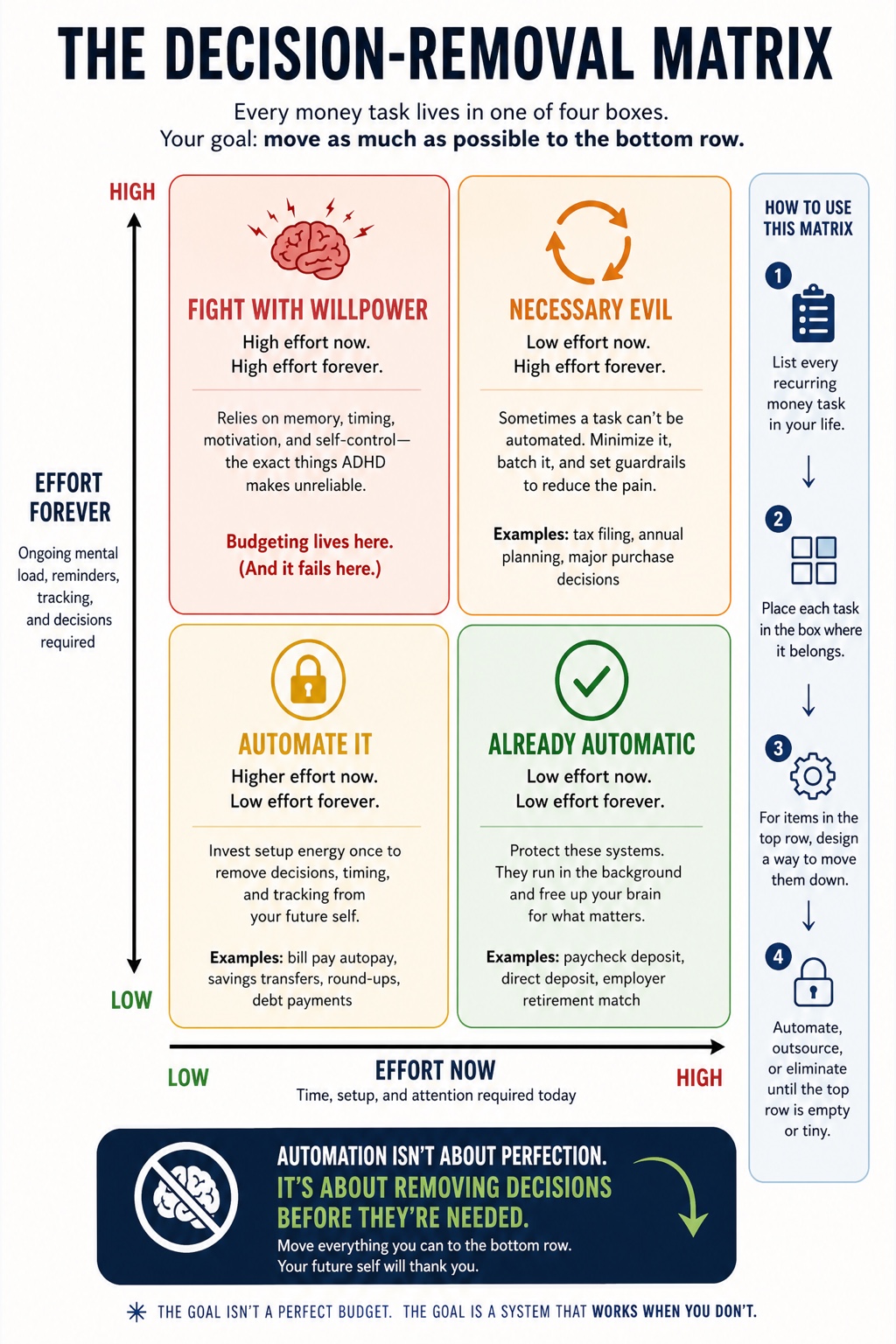
EPUB, PDF, and HTML are included so the book can work on an e-reader, as a designed copy, or as a searchable desk reference.
For e-readers and reading apps.
The designed edition with diagrams and layouts intact.
Searchable, copy-pasteable, and practical as a reference.
Yes. You get the complete edition, including the chapter sequence and internal materials described on this page.
EPUB, PDF, and HTML are included so you can read on an e-reader, keep a designed copy, or use the searchable browser version.
Because this is an instant digital download, broad change-of-mind refunds are not offered after the files have been accessed. Refund requests are reviewed within 7 days for duplicate purchases, accidental purchases before access, access failures we cannot fix, wrong files, corrupted files, or pages that materially misdescribe the book.