Who it is for
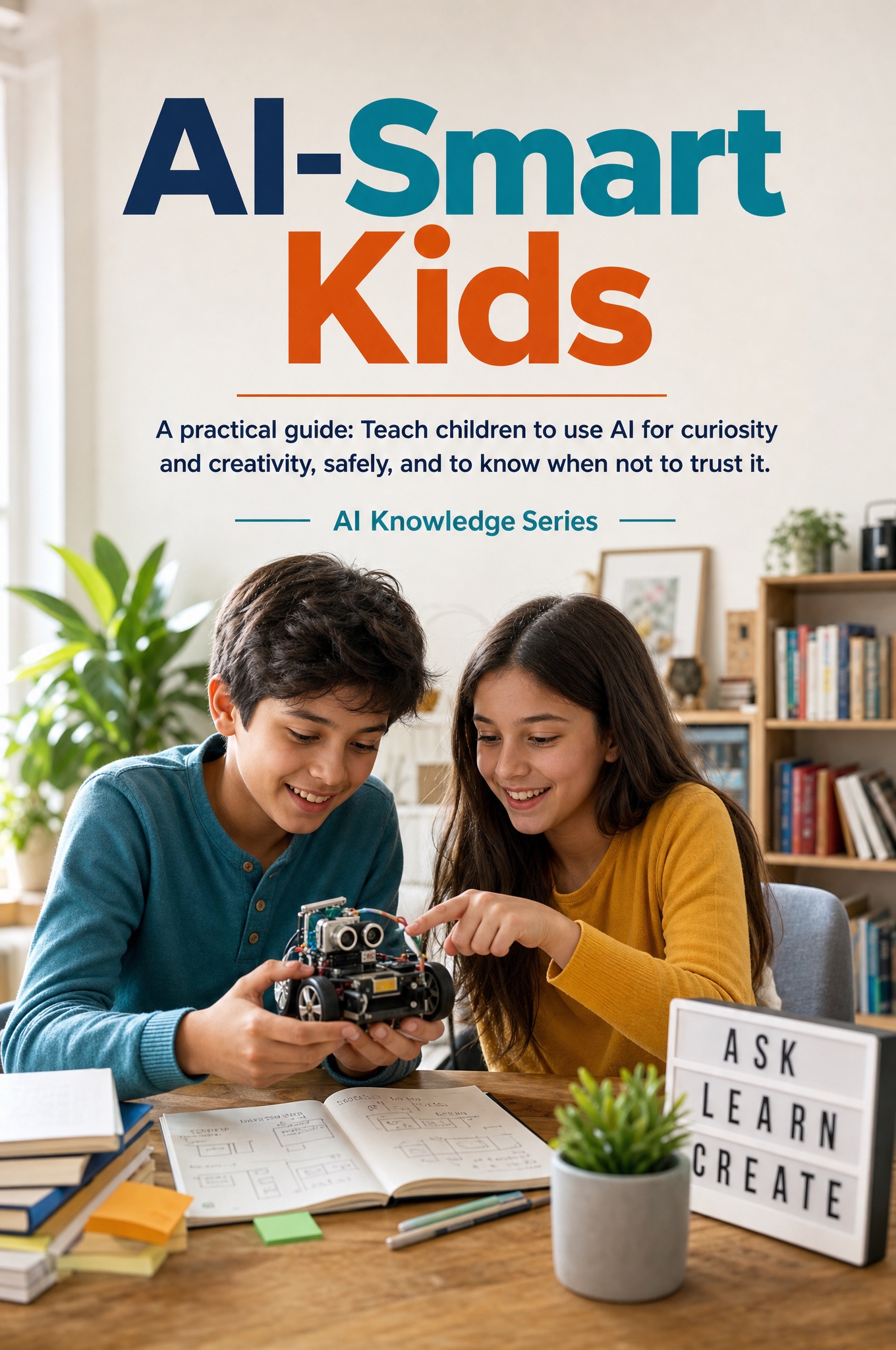
For parents who want to help their children use AI for curiosity and creativity, safely—and know when not to trust it.
Teach your child to use AI for curiosity and creativity, stay safe, and know when not to trust it.
You'll learn to strip away the magic and explain AI to your child as a pattern-spotting tool that predicts likely answers—not a thinking friend or a robot brain. You get plain-language analogies, simple unplugged demonstrations, and the exact words to use so a young learner builds an accurate mental model from the start.
You can feel the moment coming. Your kid is at the kitchen table, half-finished worksheet pushed aside, asking if they can "just ask the AI.".
For parents who want to help their children use AI for curiosity and creativity, safely—and know when not to trust it.
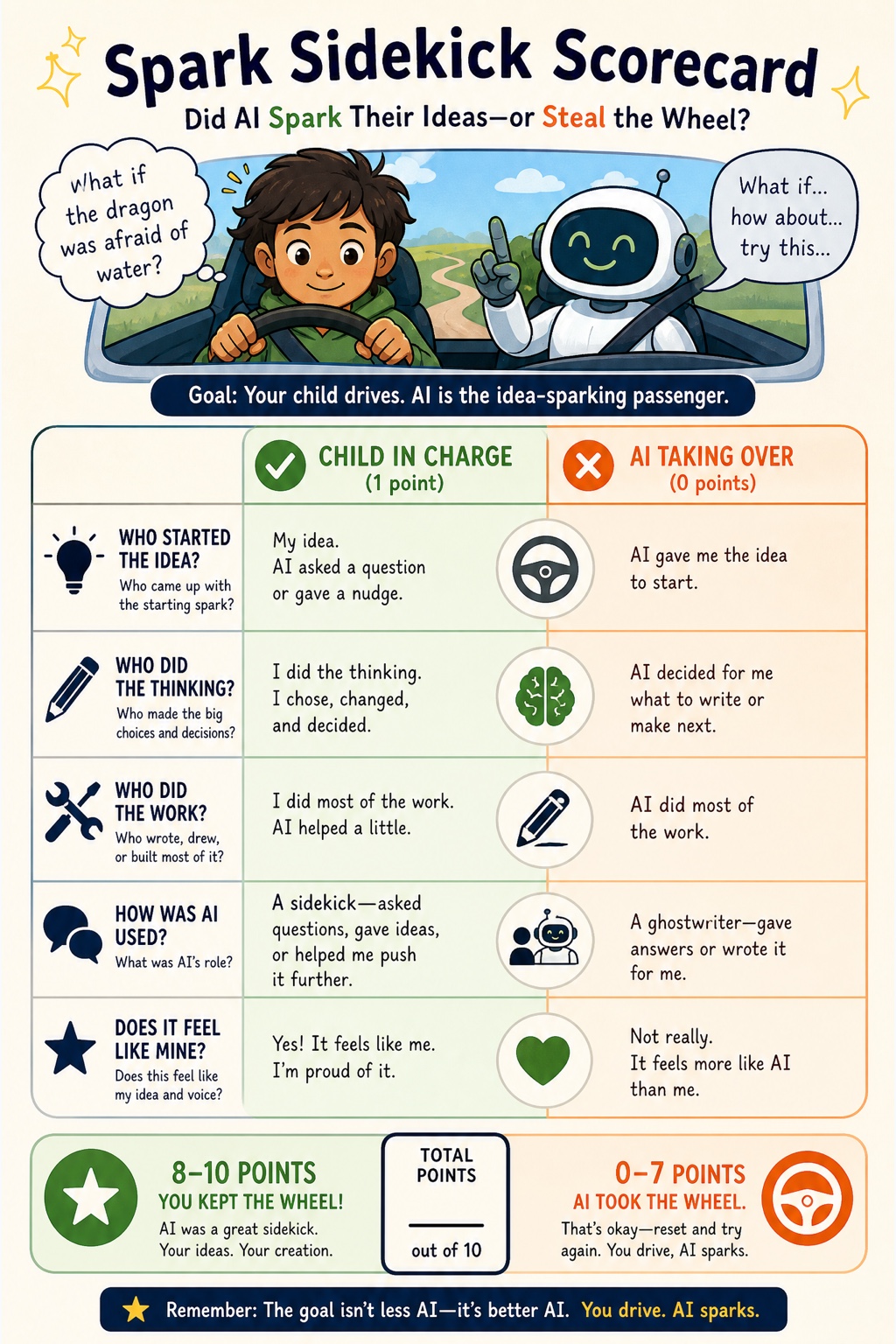
Hand a child a blank page and the words "make something," and you'll often get a stuck look, a doodle in the corner, or "I don't know what to do." The hard part of creating isn't the making—it's starting, getting unstuck, and pushing an idea past its first dull version.
Have your child ask the AI about an animal that doesn't exist—a "snow tiger that breathes fire," say—and watch what comes back.
Watch what happens the next time your child gets stuck on a math problem. Count the seconds.
A nine-year-old asks an AI chatbot to help with a story about her family. To make it "more real," she types in her full name, her little brother's name, the name of her school, and the street where they live.
Before moving on, check that the picture stuck. Your child has it when they can answer these in their own words.
You can prove the prediction idea in five minutes with no device, because it puts the child in the machine's seat. Say the start of a sentence and have your child shout the most likely ending: "Twinkle, twinkle, little ___," "Once upon a ___," "Peanut butter and ___." They'll nail every one. Now ask: how did you know?
Try this once, then let it become a routine. Your child names a seed—a topic, character, or question they're already into. You shape one prompt together using the "give me options, I'll choose" pattern: AI offers, child chooses, pick exactly one and ignore the rest. Screen off, making on.
Watch how a small change moves an activity from replacing to amplifying. Say your nine-year-old wants help with a poem about autumn. A weak prompt—"Write me a poem about autumn"—produces a finished poem the child reads and learns nothing from. The stronger version starts with "I'm writing a short poem about autumn.".
EPUB, PDF, and HTML are included so the book can work on an e-reader, as a designed copy, or as a searchable desk reference.
For e-readers and reading apps.
The designed edition with diagrams and layouts intact.
Searchable, copy-pasteable, and practical as a reference.
Yes. You get the complete edition, including the chapter sequence and internal materials described on this page.
EPUB, PDF, and HTML are included so you can read on an e-reader, keep a designed copy, or use the searchable browser version.
Because this is an instant digital download, broad change-of-mind refunds are not offered after the files have been accessed. Refund requests are reviewed within 7 days for duplicate purchases, accidental purchases before access, access failures we cannot fix, wrong files, corrupted files, or pages that materially misdescribe the book.