The First Answer Is Almost Always the Wrong One
You learn why the first thing a chatbot hands you is almost always wrong — polite, padded, and weirdly corporate — and how to push past it to something that actually sounds like you.
Draft the hard text, polish the dating profile, and say what you mean — with AI as your communication coach.
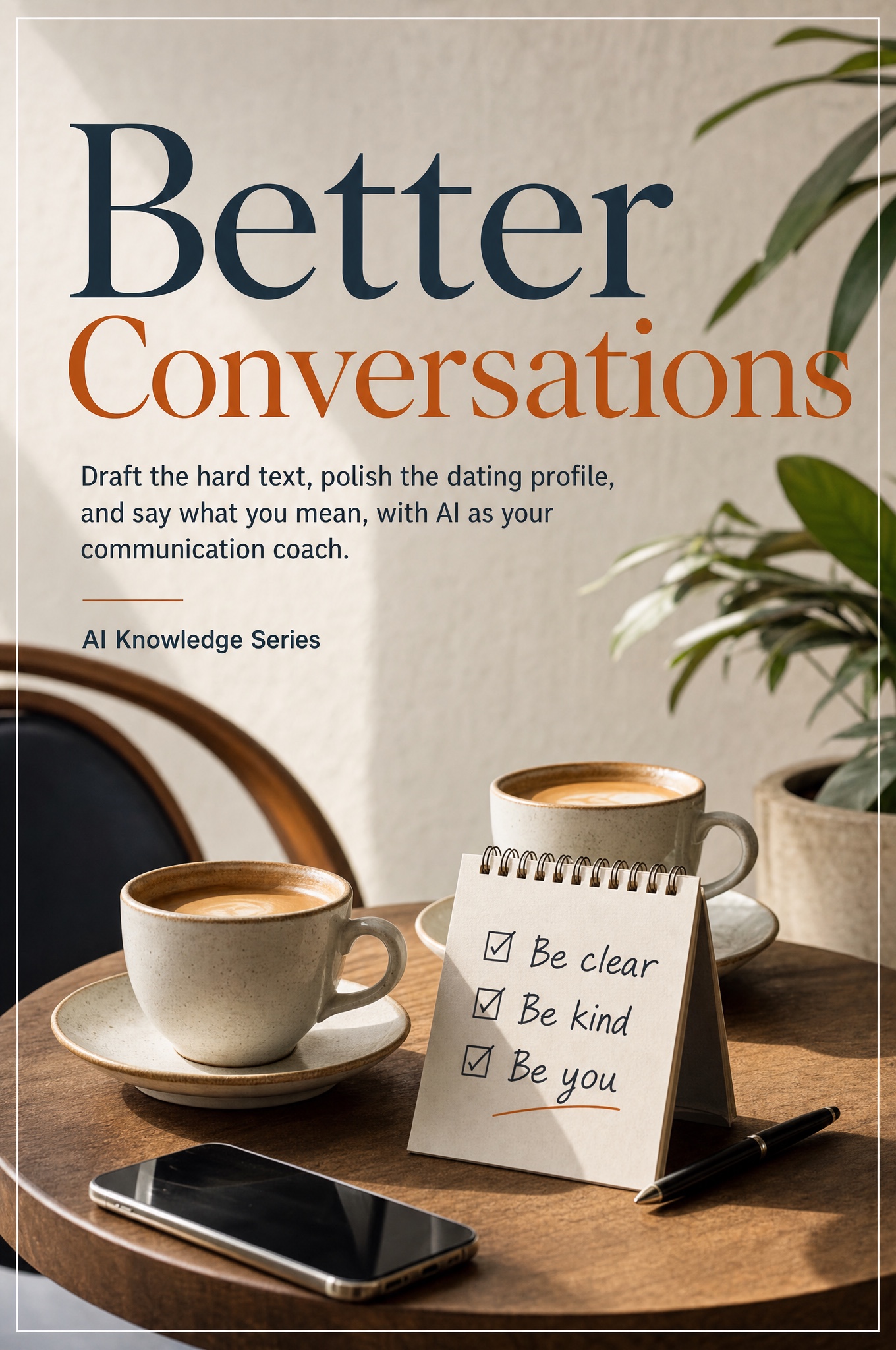
Learn what AI can and cannot do for the way you communicate, and why the goal is to sound more like yourself, not less. You get the ground rules for using AI to think through what you want to say, a clear line between coaching and faking, and a straight answer to honesty worries like "chatfishing" before they trip you up.
You know the moment: you open a blank message box and your stomach drops. Maybe it's a text you owe a friend, a profile that makes you cringe, or a conversation you keep rehearsing in the shower and never actually having. It sneaks up on you.
You learn why the first thing a chatbot hands you is almost always wrong — polite, padded, and weirdly corporate — and how to push past it to something that actually sounds like you.
You finally send the message stuck in your drafts — like the text to a friend who keeps canceling on you at the last minute — instead of leaving it to sit.
You bring the care you give a written boundary — writing it, sitting with it, trimming it — into the conversations you have out loud, instead of winging it in the moment.
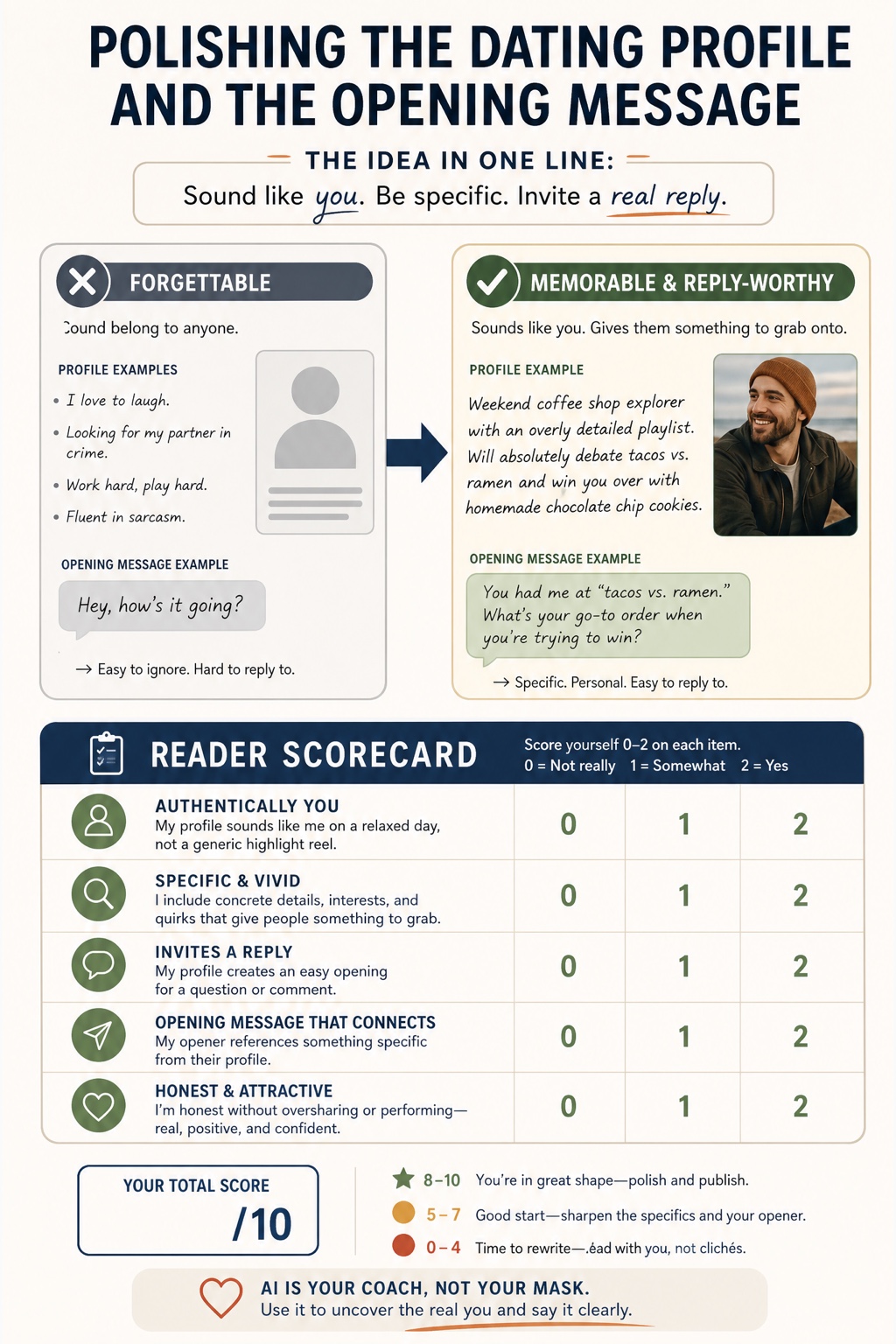
You spot the strange sameness that makes a dating profile sound like anyone — "I love to laugh" — and replace it with details that could only be you.
Take one low-stakes message you need to send this week — confirming plans, a quick thank-you, a small ask. Run it through the four-part structure, then deliberately reject the first answer with one specific correction. Notice how much the second version improves once you tell the tool why the first one was off.
You don't need prompt tricks off social media — just one repeatable skeleton with four parts: Situation, Goal, Tone, Constraints. They're the same four questions any thoughtful friend would ask before weighing in, starting with who's involved, what's going on, and the history that matters.
Find a hard text you've actually been avoiding, then work it in three passes. Dump it raw — type the angry, scared, or rambling version you'd never send, no editing — paste it into your AI tool, and use the fact-versus-feeling prompt to sort what it flags.
Start with what most people actually type when they're upset — a raw first draft to a friend who bailed for the third time: "Wow, canceling AGAIN. I rearranged my whole Saturday for this. Must be nice to flake on people whenever you feel like it.".
Work through these in order, and don't skip the first — it's the only step the machine can't do for you. Harvest: run the interview prompt and save every specific detail it pulls out of you, even the ones that feel too small. The small ones are usually the best.
EPUB, PDF, and HTML are included so the book can work on an e-reader, as a designed copy, or as a searchable desk reference.
For e-readers and reading apps.
The designed edition with diagrams and layouts intact.
Searchable, copy-pasteable, and practical as a reference.
Yes. You get the complete edition, including the chapter sequence and internal materials described on this page.
EPUB, PDF, and HTML are included so you can read on an e-reader, keep a designed copy, or use the searchable browser version.
Because this is an instant digital download, broad change-of-mind refunds are not offered after the files have been accessed. Refund requests are reviewed within 7 days for duplicate purchases, accidental purchases before access, access failures we cannot fix, wrong files, corrupted files, or pages that materially misdescribe the book.