When a fan-out goes quietly wrong
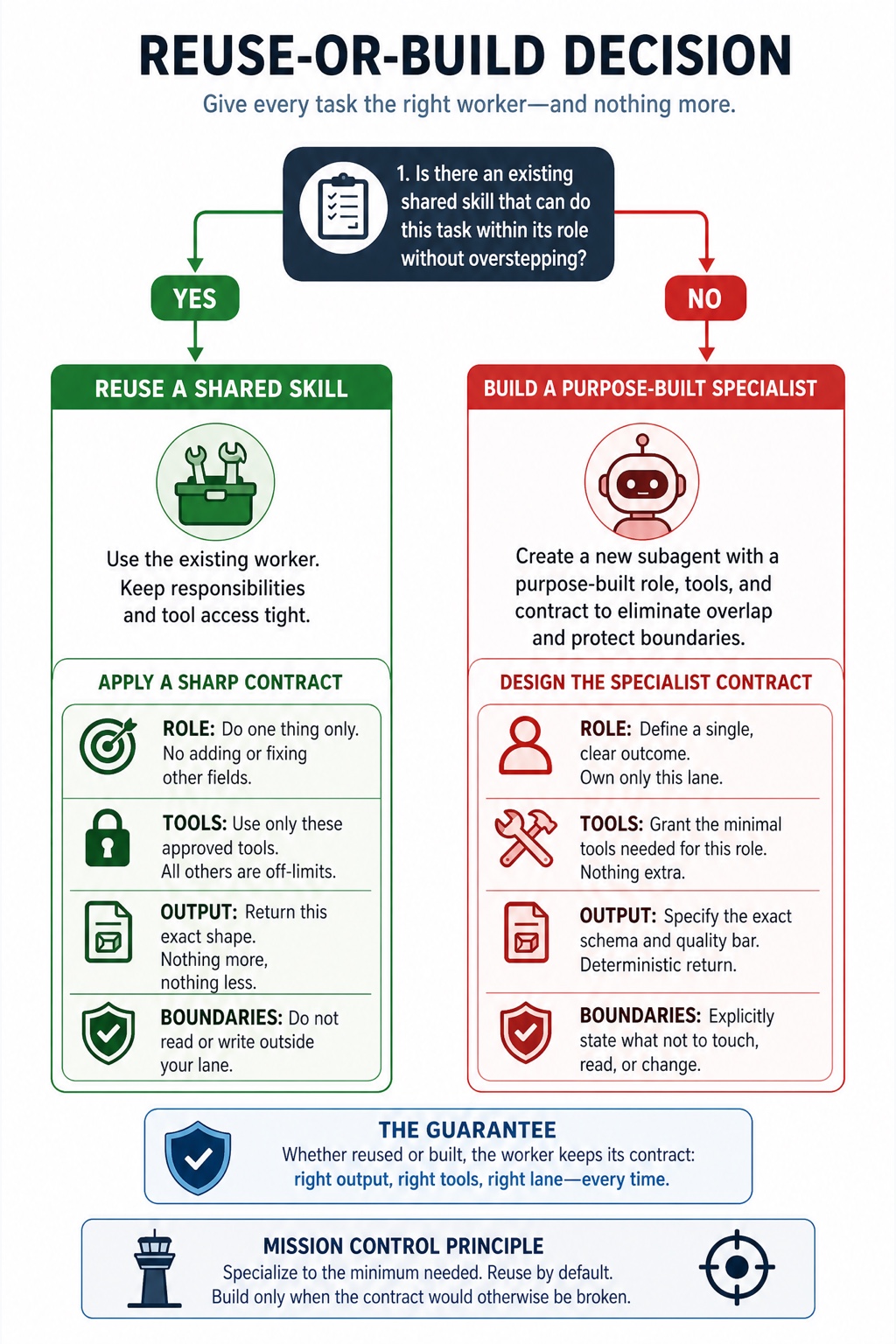
You learn that a clean fan-out is only as good as the workers it spawns. Make each worker return the right shape, touch only the systems it was meant to touch, and stay in the lane the orchestrator assigned.
Orchestrate parallel Hermes subagents with Mission Control patterns, MCP integration, and Firecrawl — for production-grade automation.
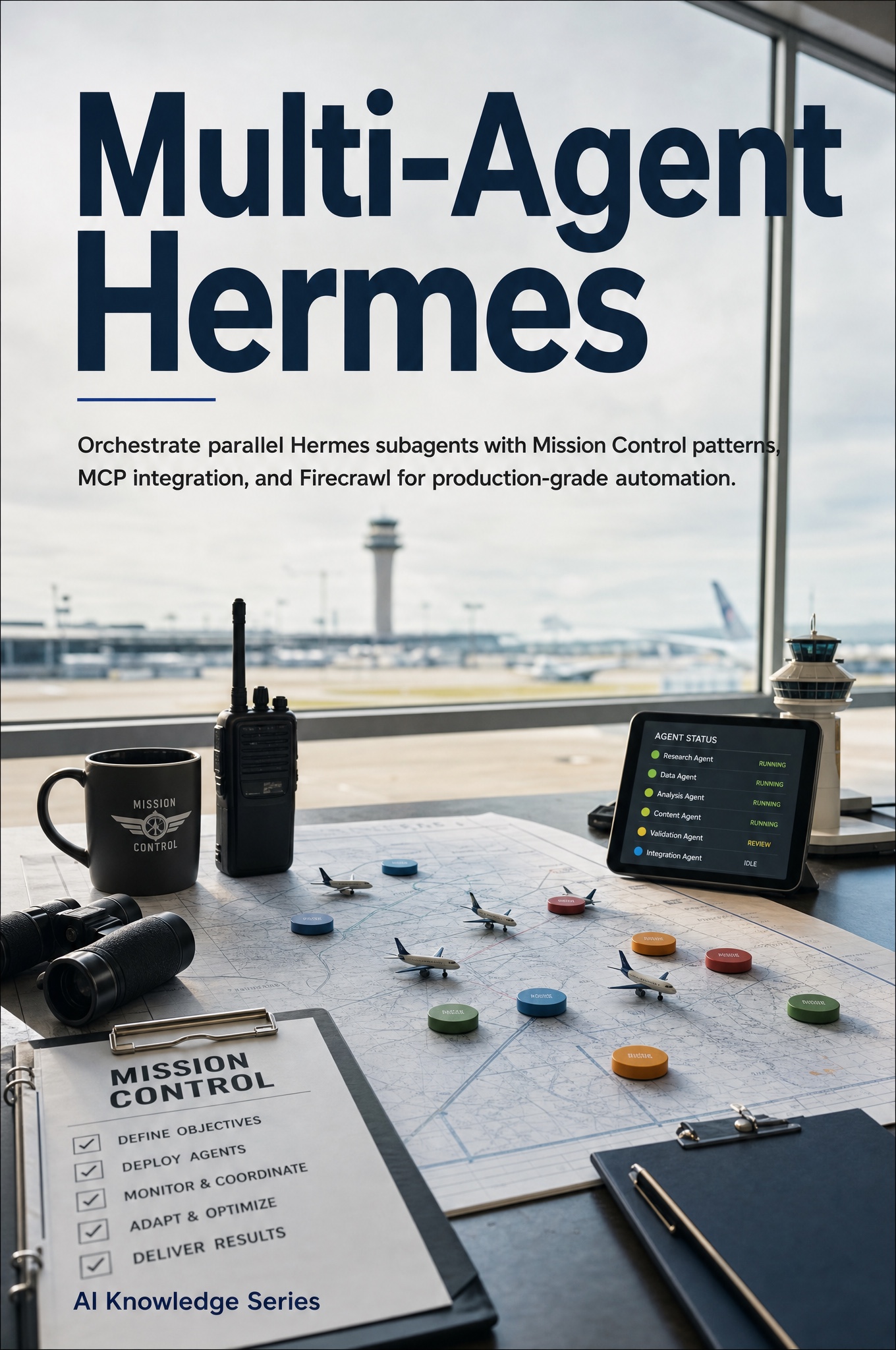
Know exactly when a single Hermes agent with isolated sub-agent delegation stops scaling and a truly orchestrated system starts paying off — grounded in the architecture's recent shift from delegation toward genuine multi-agent workflows.
You have a demo. Your main agent decomposed a documentation-ingestion job — crawl a vendor's docs site, extract the API reference, build an internal knowledge base — three workers ran in parallel through Firecrawl and an MCP server, Mission Control showed green, and the merged index came back clean.
You learn that a clean fan-out is only as good as the workers it spawns. Make each worker return the right shape, touch only the systems it was meant to touch, and stay in the lane the orchestrator assigned.
You see that a worker is only as capable as the tools it can reach — and only as dangerous — through a research worker spun up to pull competitor pricing into a report.
At 02:31 the dashboard says the run is complete, and the report ships. You trace the four distinct ways a worker fails while everything still looks green.
You arrive on a Monday to a billing alert: over the weekend your orchestrated fleet spent more on model tokens and tool calls than the prior three weeks combined — and no incident fired.
Score a candidate workload before you commit. Rate each criterion High, Medium, or Low — decomposability (can you name discrete subtasks with clean inputs and outputs?) and independence (can subtasks run without each other's intermediate output?) — and let the result route you toward a single agent or a fleet.
A team building the competitive-monitoring workflow assumed parallel was the answer because the task was large. It was — but it had a hidden dependency: drafting needed the reconciled changes, and reconciliation needed every competitor page scraped first.
You start with one agent. It reads your files, calls a few tools, answers questions, and spins off an isolated sub-agent for a slice of work in a clean context when a task gets large. For a while that's enough — then the work changes shape.
Choose your execution model deliberately. There are three, and picking wrong is paid in latency, token spend, and debugging time. A single agent — one context, one thread — is right when the task is small, the steps depend on each other, or the reasoning needs shared context that splitting would fracture.
Run any workload you're tempted to orchestrate through the decomposition sheet before spawning anything. Fill it in on paper: name the whole task in one sentence, then each candidate subtask. If you can't complete a row, you're not ready to fan out.
EPUB, PDF, and HTML are included so the book can work on an e-reader, as a designed copy, or as a searchable desk reference.
For e-readers and reading apps.
The designed edition with diagrams and layouts intact.
Searchable, copy-pasteable, and practical as a reference.
Yes. You get the complete edition, including the chapter sequence and internal materials described on this page.
EPUB, PDF, and HTML are included so you can read on an e-reader, keep a designed copy, or use the searchable browser version.
Because this is an instant digital download, broad change-of-mind refunds are not offered after the files have been accessed. Refund requests are reviewed within 7 days for duplicate purchases, accidental purchases before access, access failures we cannot fix, wrong files, corrupted files, or pages that materially misdescribe the book.