Who it is for
For anyone who wants a long-term savings and retirement plan without grinding through the projections and the boring math themselves.
Build a long-term savings and retirement plan with AI handling the projections and the boring math.
More savers are leaning on AI chatbots for retirement help, even as experts flag real accuracy limits. The fix is to use AI as a second opinion on your plan, not as an oracle.
A retirement plan built once and never touched is worth less than the afternoon you spent on it. One 32-year-old had a 401(k) the whole time — she just never opened it, and her target-date fund had quietly allocated her savings as if she'd retired a decade early.
For anyone who wants a long-term savings and retirement plan without grinding through the projections and the boring math themselves.
You learn why "I want to retire comfortably" isn't a plan. To one person comfortable means a paid-off house and quiet mornings; to another, two international trips a year and always picking up the check at family dinners.
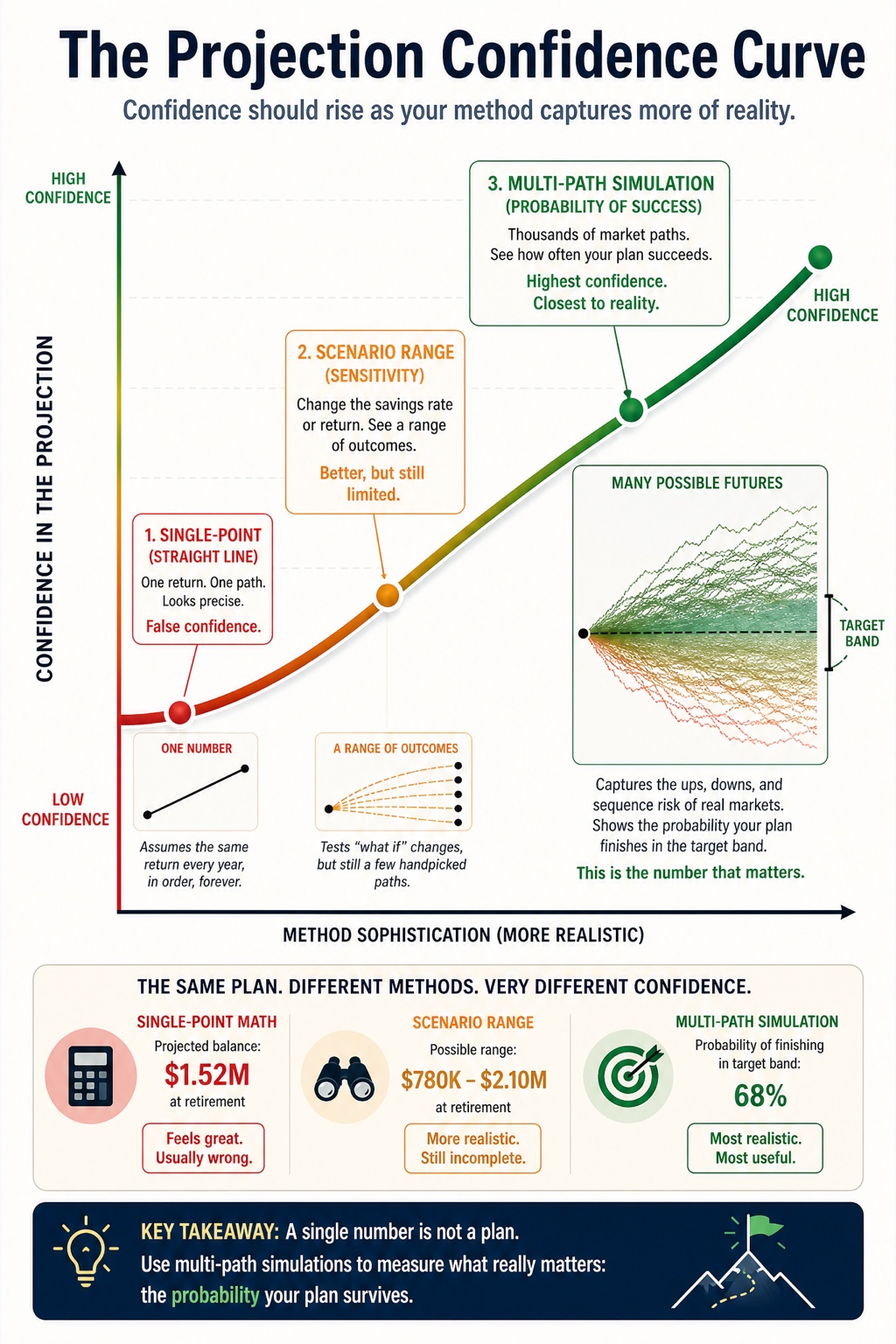
You spot the tempting shortcut: current balance times an annual growth rate, raised to the years you have left. Compound it out and you get a clean, confident number that only holds up in a straight line.
You picked a fund with a year in its name that roughly matched your retirement date, then moved on. But "set it and forget it" only works if the fund's idea of your timeline still matches yours.
For thirty years the instructions were simple: put money in, leave it alone, let it grow. The day you retire, every one of them reverses — and most get harder.
Before you point an AI model at your retirement, take an honest reading of where you stand. Score each statement from 1 (not true at all) to 5 (completely true) and total it up — starting with whether you know roughly what you have saved across all retirement and brokerage accounts.
Run this before you move to another chapter. Every box should be checked with a real figure, not an estimate.
Once the four zones are filled and stripped of identifiers, you hand them to the model as a structured brief, not a paragraph of prose. Structure beats narrative because it lets the model spot what's missing — and a missing input is the failure you most want caught before projection day.
The New York Times reported on Caitlyn Yingling, a 32-year-old who had a 401(k) but had never opened it. When a personal-finance podcast finally nudged her to look, she found her Fidelity target-date fund allocated as though she'd retired in 2015 — roughly a decade before she started looking.
EPUB, PDF, and HTML are included so the book can work on an e-reader, as a designed copy, or as a searchable desk reference.
For e-readers and reading apps.
The designed edition with diagrams and layouts intact.
Searchable, copy-pasteable, and practical as a reference.
Yes. You get the complete edition, including the chapter sequence and internal materials described on this page.
EPUB, PDF, and HTML are included so you can read on an e-reader, keep a designed copy, or use the searchable browser version.
Because this is an instant digital download, broad change-of-mind refunds are not offered after the files have been accessed. Refund requests are reviewed within 7 days for duplicate purchases, accidental purchases before access, access failures we cannot fix, wrong files, corrupted files, or pages that materially misdescribe the book.