The brief decides ranking, not the draft
You learn that a draft can fail in two places: the words, or the instructions that produced them. Most teams only inspect the words—you'll fix the brief first.
Research, outline, and draft search-ready content that actually ranks.
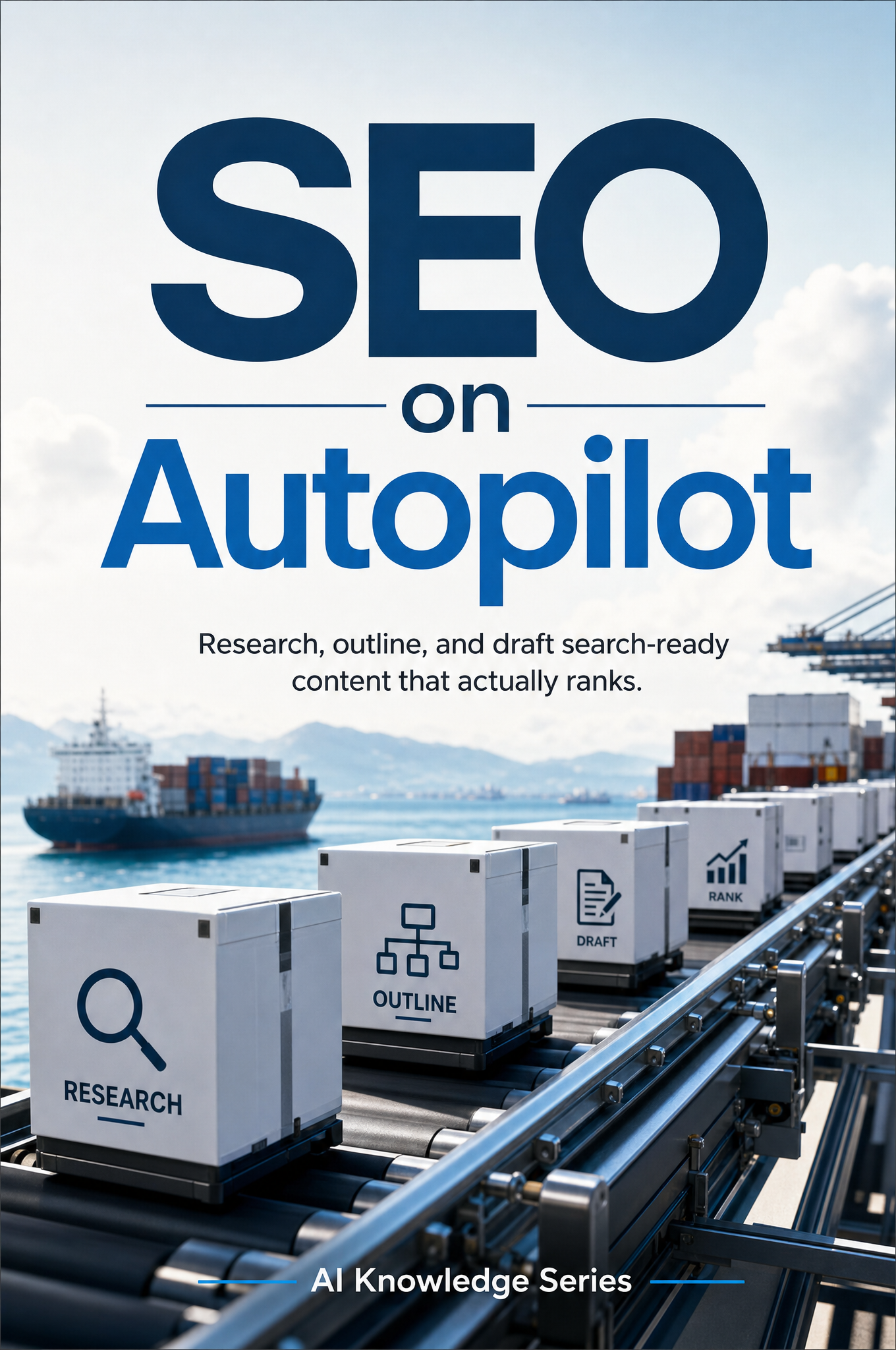
Automated SEO is usually sold like a vending machine: feed it a keyword, pull a lever, collect ranked pages. One vendor headline promises a 215% traffic jump from a "hands-free" system. The reality is messier.
You can build six working parts—research that produces a scored query backlog, briefs, drafts, optimized pages—and still not have a system. Six separate documents, six separate habits, and one person's memory don't add up to autopilot.
You learn that a draft can fail in two places: the words, or the instructions that produced them. Most teams only inspect the words—you'll fix the brief first.
You stop accepting whatever a model hands back. When a single line becomes four paragraphs, you can tell whether they're the paragraphs a searcher actually needs or just the ones easiest to generate.
You connect every finishable piece—a query set, a brief, a draft, an optimized page—into live, indexed output. The gap between "we made it" and "it's published" is where autopilot quietly dies, because no one decided who pushes the button and when.
You learn to read rankings honestly. A page that sat third in March can slip to page two by September without you touching a thing—and you'll know why.
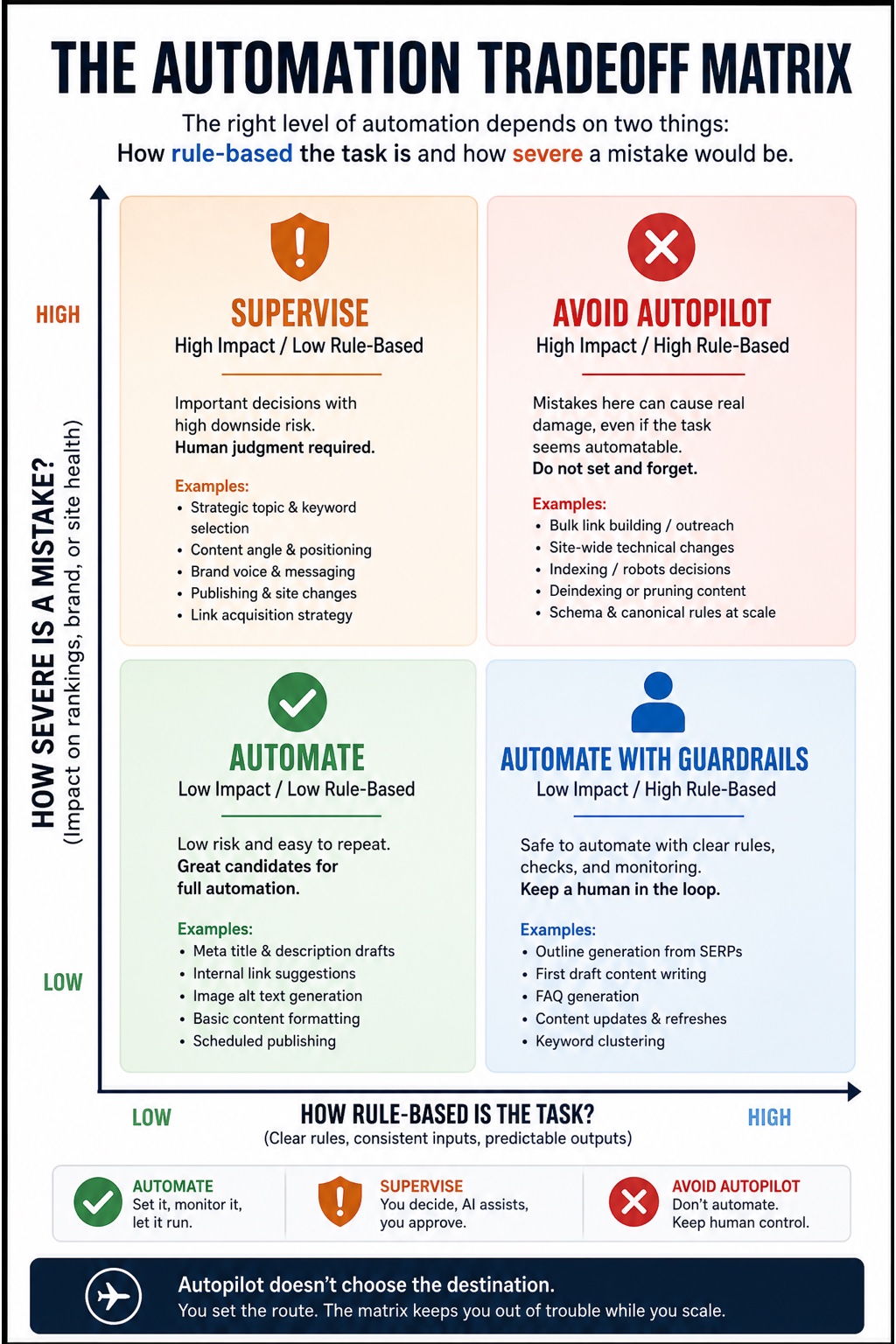
Take fifteen minutes and list every recurring SEO task you or your team performs in a month, then sort each into one of four columns. For each task, ask whether it's rule-based or needs human judgment—and build your own thinking, not a prompt to hand a tool.
You can't measure improvement without a starting line. Score yourself honestly on five readiness criteria, rating each 0 (not in place), 1 (partial), or 2 (solid): a clear success metric, a prioritized keyword backlog,.
Sit down with your current SEO to-do list and sort it by tier. "Submit new URLs for indexing" is Tier 1—turn it on and forget it. "Draft a 2,000-word comparison post" is Tier 2—let AI draft from a locked brief, then read every claim before it publishes.
"SEO automation" isn't one thing. It splits into three categories with sharply different risk profiles, and treating them the same is how people get burned. Tier 1, technical SEO automation, is low risk—automate it freely.
EPUB, PDF, and HTML are included so the book can work on an e-reader, as a designed copy, or as a searchable desk reference.
For e-readers and reading apps.
The designed edition with diagrams and layouts intact.
Searchable, copy-pasteable, and practical as a reference.
Yes. You get the complete edition, including the chapter sequence and internal materials described on this page.
EPUB, PDF, and HTML are included so you can read on an e-reader, keep a designed copy, or use the searchable browser version.
Because this is an instant digital download, broad change-of-mind refunds are not offered after the files have been accessed. Refund requests are reviewed within 7 days for duplicate purchases, accidental purchases before access, access failures we cannot fix, wrong files, corrupted files, or pages that materially misdescribe the book.