AI Knowledge Series / beginner

The Agent That Learns Your Work

A plain-language guide to Hermes Agent's memory and skill system, so non-technical users can put it to work right away.

10 chaptersEPUB + PDF + HTMLbeginner guide pricingDRM-free files
The Agent That Learns Your Work book cover
The problem

It starts with the situation you're actually in.

Most software treats every conversation as the first. You re-explain your job, your project, and the way you like things written. Hermes is a different kind of tool: one that keeps what it learns.

You can have Hermes Agent running in an afternoon. The official setup isn't a glossy app-store download—it's a terminal command. On Windows, use the PowerShell command shown in the current Hermes documentation before you start.
Outcomes

What you'll be able to do.

Memory you can actually open and read

You can open the folder where Hermes keeps what it knows—no brain, no single hidden database. You'll find ordinary files: plain-text memory files you can inspect, skill files the agent reuses, and a searchable record of past sessions.

Watch one task improve across three runs

You take the work you redo most—say the monthly expense report—and hand it over once: pull the receipts, sort them into the categories your finance team actually uses, flag anything over the approval limit, and write a one-paragraph summary for your manager.

Organizing research, and three more core workflows

You can teach the agent a single project, then apply it to the four kinds of work that cover most jobs: finding and organizing information, producing and revising documents, tracking what's owed and to whom, and running the small recurring errands that eat your attention.

Where things actually go wrong

You'll see how an agent that learned your work can confidently act on something that's no longer true. If three months ago you told Hermes your main client was a fintech startup and that you preferred terse, bullet-point status updates, it keeps applying that until you correct it.
Inside the book

A closer look at the work inside.

What this book promises you

  • The first time, you state the rules and correct the date format once.
  • The agent records the preference as a durable fact about how you like summaries done.
  • The next time you hand it notes, it applies the format without being told.
  • Your job shrinks to handing over the notes and spot-checking the result.

The same request, two kinds of tool

Say your job is turning messy meeting notes into a clean summary your team can scan, with a firm preference: no closing "in summary" paragraph, and dates written as 2026-06-14, not "June 14th." With an ordinary chatbot you paste the notes and re-state the rules every single time.

The three parts, in plain terms

  • Memory supplies context. Before writing a word, the agent checks its notebook. It finds that you have asked for "plain language, no jargon" before and that you like note titles in.
  • Skills supply the procedure. If the agent has summarized documents for you before, it pulls the matching recipe card: extract key claims, compress to five points, strip technical.
  • The learning loop decides what to keep. After delivering the summary, the agent looks back. If this was a clean, repeatable task, it may write a new skill card: "summarize a.

One task, all three parts

You type: summarize the attached research PDF in five bullet points, plain language, no jargon, and save it as a note titled "summary - [document name]." Watch each part hand off to the next, starting with memory supplying the context.

Why this beats a clever one-off

Compare two assistants on the invoice job. A standard chatbot is brilliant in the moment and amnesiac after it—each Thursday you re-explain the format, the folder, the threshold. The quality is fine, but the cost never drops; you pay the same setup tax forever.

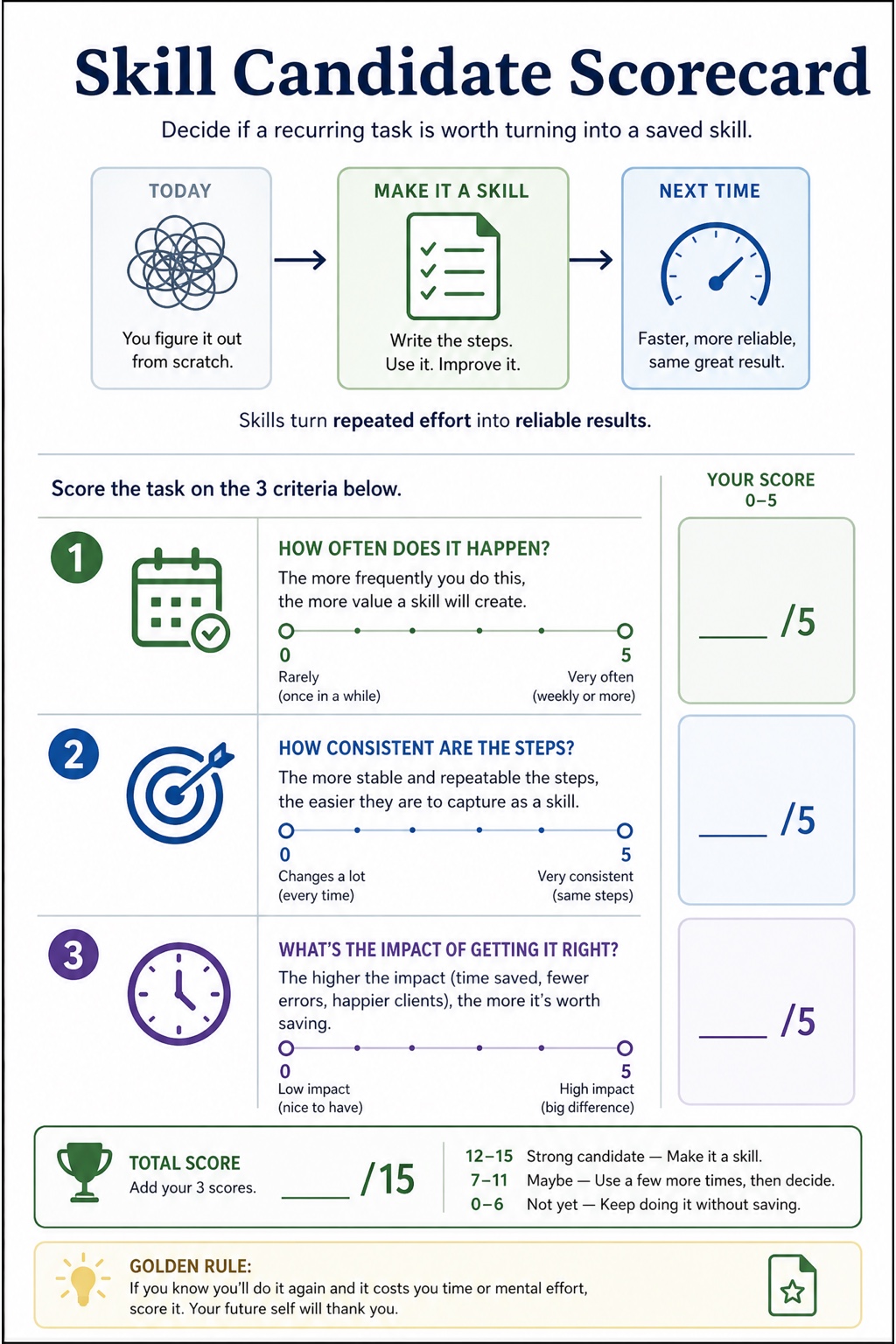
The Agent That Learns Your Work visual framework
The Agent That Learns Your Work frameworkInside the book
Visual preview

A diagram you can keep open while you work.

Table of contents

10 chapters, built to be read in order.

01

An Agent That Gets Better the Longer You Use It

02

How an Agent Thinks, Remembers, and Acts

03

The Memory System—What It Keeps and Why

04

Skills—When the Agent Writes Its Own Instructions

05

The Learning Loop in Action

06

Setting Up and Talking to Your Agent

07

Teaching the Agent Your Preferences and Projects

08

Putting Hermes to Work—Real Workflows by Role

09

Trust, Limits, and Staying in Control

10

Your First 30 Days With an Agent That Learns

146
Pages
14,205
Words
32
Exercises, checklists & tools
10
Chapters
Formats

Three formats. One purchase.

EPUB, PDF, and HTML are included so the book can work on an e-reader, as a designed copy, or as a searchable desk reference.

EPUB

For e-readers and reading apps.

PDF

The designed edition with diagrams and layouts intact.

HTML

Searchable, copy-pasteable, and practical as a reference.

Complete guide

The Agent That Learns Your Work

$4.99
beginner guide pricing
  • EPUB + PDF + HTML included in one purchase
  • 10 chapters from the complete guide
  • DRM-free files for your own devices
  • 7-day refund review for duplicate purchases, access issues, wrong files, or materially defective downloads
Add to cart - $4.99
Secure checkout / instant download / tax handled at checkout
Before you buy

Questions, answered.

Does this include the full book?

Yes. You get the complete edition, including the chapter sequence and internal materials described on this page.

Which formats are included?

EPUB, PDF, and HTML are included so you can read on an e-reader, keep a designed copy, or use the searchable browser version.

What is the refund policy?

Because this is an instant digital download, broad change-of-mind refunds are not offered after the files have been accessed. Refund requests are reviewed within 7 days for duplicate purchases, accidental purchases before access, access failures we cannot fix, wrong files, corrupted files, or pages that materially misdescribe the book.