The Gap Between "Eat Healthier" and a Plan
Type "help me eat healthier" into any AI tool and watch what comes back: oatmeal, more vegetables, drink water, cut sugar. None of it is wrong — and none of it is a plan you can follow.
Meal plans, macros, and eating for your real goals — built around your life, not a fad.
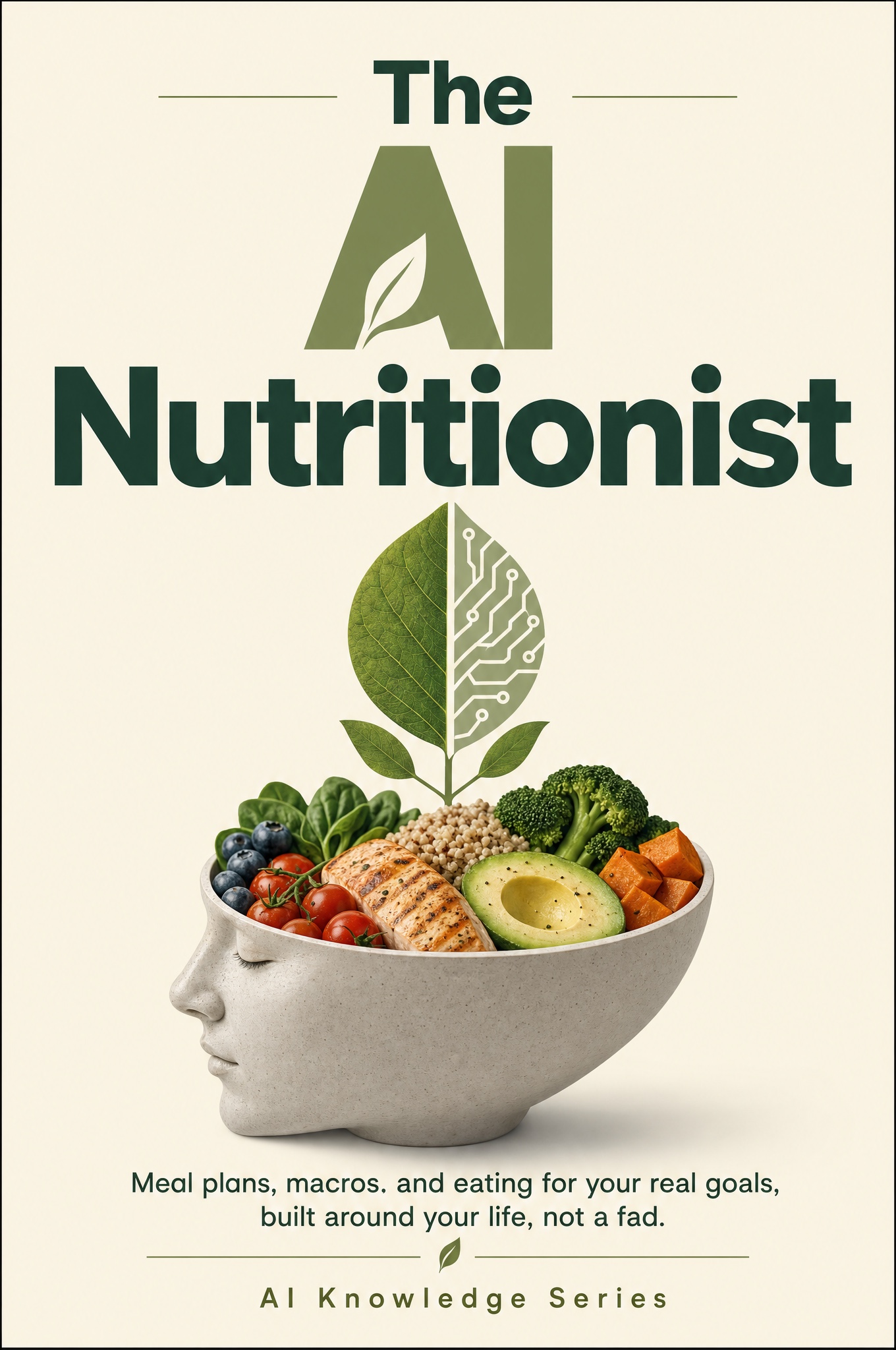
Learn what today's AI tools can and can't do for your eating, where chatbots and apps fit alongside human dietitians, and how to set realistic expectations. You come away with a clear mental model of AI as a planning assistant, plus the safety rules and red flags that tell you when to step away from the screen and talk to a professional.
Picture a Thursday eight months from now. You're tired, you skipped lunch, and there's nothing planned for dinner. Closing that gap is the whole point.
Type "help me eat healthier" into any AI tool and watch what comes back: oatmeal, more vegetables, drink water, cut sugar. None of it is wrong — and none of it is a plan you can follow.
Before an AI tool can plan a single dinner, you have to answer a bigger question first: what kind of eating are you actually doing? Mediterranean?
The scale hasn't moved in eleven days. You learn which signals are worth watching, so a stalled number doesn't send you off course.
Once your eating pattern is chosen, the blank page is the enemy. You learn to write a prompt that reads like a brief, not a wish.
Some questions are simply outside what any AI tool should answer for you. Step away from the screen and talk to a doctor or a registered dietitian when.
Teach the assistant its role at the start of any session. Paste something like this before you ask for anything: "You are acting as my meal-planning assistant, not a medical professional. I am a beginner.".
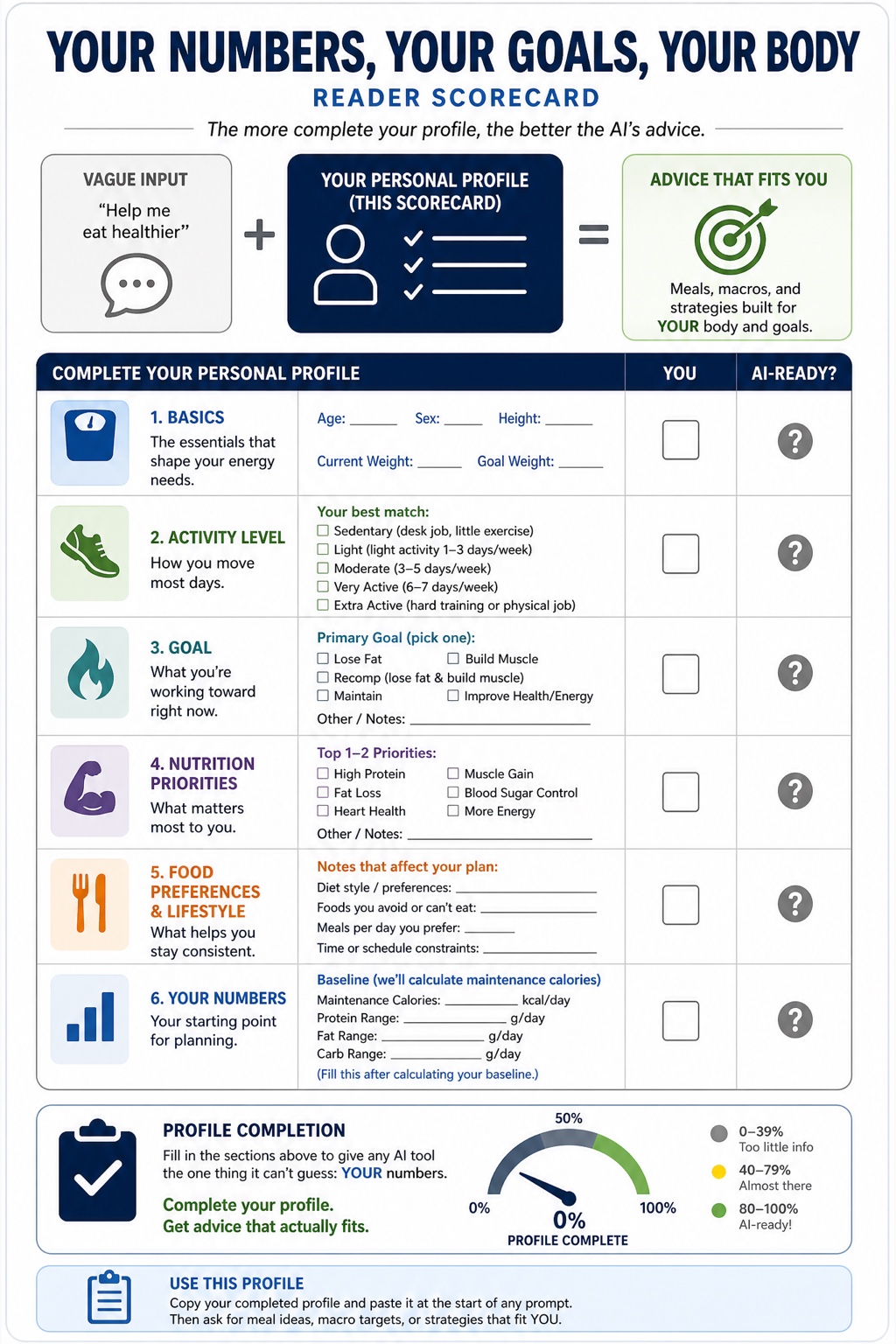
Do this now, before reading on — you don't need perfect numbers, only honest starting ones. Run a TDEE/calorie calculator and write your maintenance figure, pick your goal and set a target (maintenance, minus 300–500, or plus 200–300), and calculate your protein range (0.7–1 g per pound).
Walk through a concrete case. Say a calculator gives you: age 34, 165 lb, lightly active (desk job, two gym sessions a week), TDEE about 2,200 calories, goal to lose fat slowly while keeping strength. You set a target of 1,800 calories (a ~400-calorie cut), a protein range of 120 to 145 grams, and a rough macro split.
EPUB, PDF, and HTML are included so the book can work on an e-reader, as a designed copy, or as a searchable desk reference.
For e-readers and reading apps.
The designed edition with diagrams and layouts intact.
Searchable, copy-pasteable, and practical as a reference.
Yes. You get the complete edition, including the chapter sequence and internal materials described on this page.
EPUB, PDF, and HTML are included so you can read on an e-reader, keep a designed copy, or use the searchable browser version.
Because this is an instant digital download, broad change-of-mind refunds are not offered after the files have been accessed. Refund requests are reviewed within 7 days for duplicate purchases, accidental purchases before access, access failures we cannot fix, wrong files, corrupted files, or pages that materially misdescribe the book.