Who it is for
For writers who want to work better, faster, and more consistently with AI co-pilots.
Write better, faster, and more consistently with AI co-pilots.
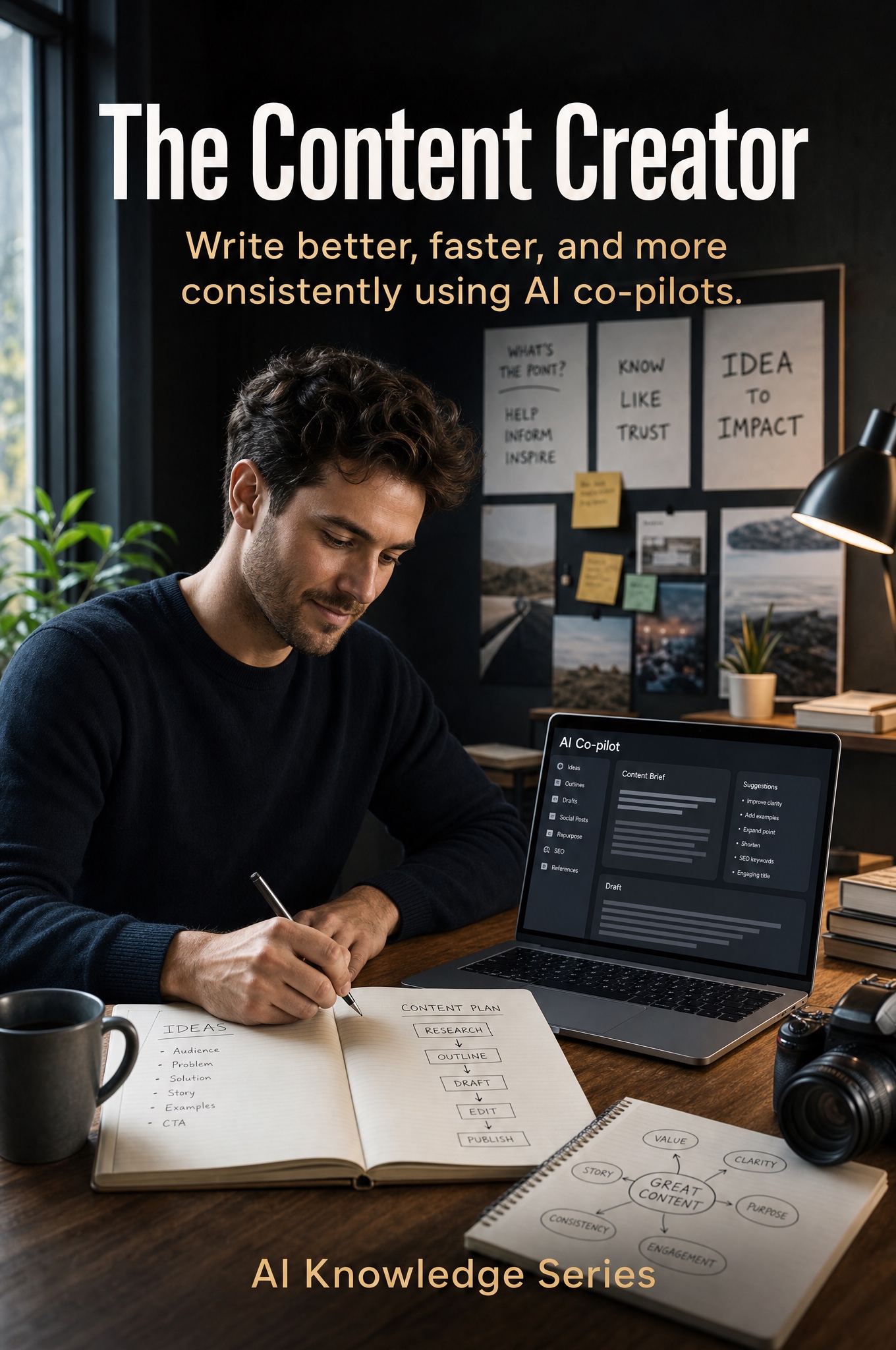
You already know how to write — that's the starting assumption, and it matters more than it seems. This isn't about handing your work off to a machine.
Before any of this, every piece started from nothing: a blank document, a vague idea, a hope the words would come. You'd estimate twenty minutes and lose two hours — and that's not a discipline problem.
For writers who want to work better, faster, and more consistently with AI co-pilots.
You learn to spot a weak prompt before it wastes your time — the vague "Write a blog post about productivity for remote workers" you'd type into ChatGPT or Claude.
You sit down to a blank document knowing exactly what you need to write — a newsletter, a tutorial, a LinkedIn article about something genuinely worth sharing — and actually get moving.
You write a strong article you're genuinely pleased with, and you close the gap that keeps good work from going live.
You finish a draft, read it back once, and move it forward instead of letting it sit.
Pick one piece of content you need to write this week — a LinkedIn post, a newsletter intro, a product description, a blog outline. Draft the prompt using the RCFC structure, then check it against four questions, starting with Role: have you told the model whose voice or perspective to write from?
You type something into ChatGPT or Claude — "Write a blog post about productivity for remote workers" — hit enter, and get back eight hundred words of competent-sounding nothing. Every sentence is true. None of it is yours. None of it is useful.
Four pieces of information give an AI enough constraint to produce something specific and usable: Role — the perspective or voice to write from; Context — background on the audience, platform, or purpose; Format — the output structure: length, sections, style, what to include and exclude; and Constraint.
A style reference is a one-page brief that describes your writing voice in terms a model can act on. Write it once, then paste it into any draft prompt that involves your own content — just open a plain text file and answer five prompts honestly.
Take a paragraph as it might come out of an AI-assisted draft: "Many content creators are seeing significant improvements in their output since adopting AI tools. These tools can help with a variety of tasks and often lead to better results across the board." Then run the claim audit prompt on it.
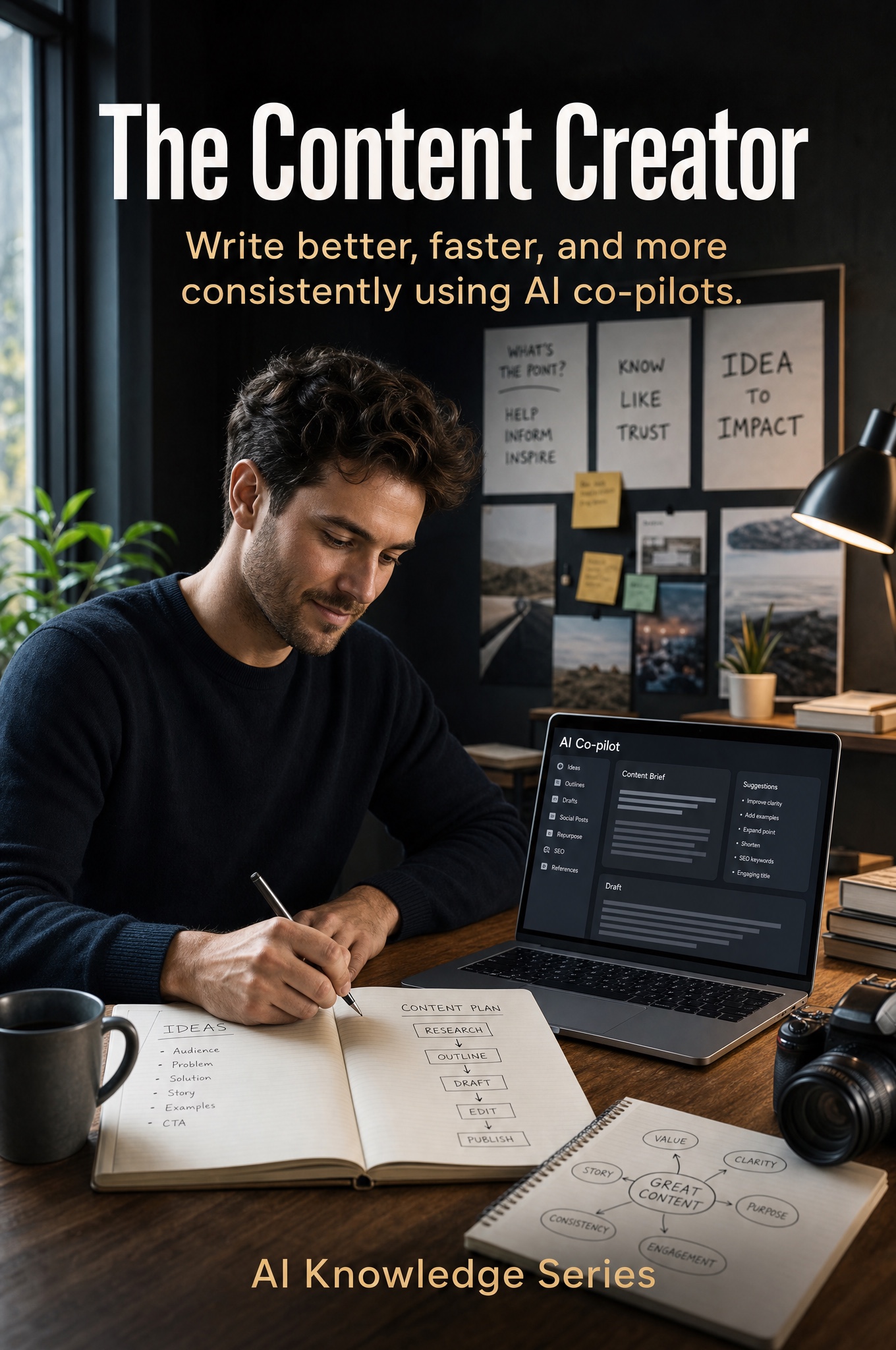
EPUB, PDF, and HTML are included so the book can work on an e-reader, as a designed copy, or as a searchable desk reference.
For e-readers and reading apps.
The designed edition with diagrams and layouts intact.
Searchable, copy-pasteable, and practical as a reference.
Yes. You get the complete edition, including the chapter sequence and internal materials described on this page.
EPUB, PDF, and HTML are included so you can read on an e-reader, keep a designed copy, or use the searchable browser version.
Because this is an instant digital download, broad change-of-mind refunds are not offered after the files have been accessed. Refund requests are reviewed within 7 days for duplicate purchases, accidental purchases before access, access failures we cannot fix, wrong files, corrupted files, or pages that materially misdescribe the book.