The two jobs AI does well, and the one it does badly
You wrote "the VP of operations probably cares about onboarding time" because that's what VPs of operations usually care about. Probably and usually lose deals.
Prep, personalize, and deliver product demos that win the room — with AI rehearsing every objection first.
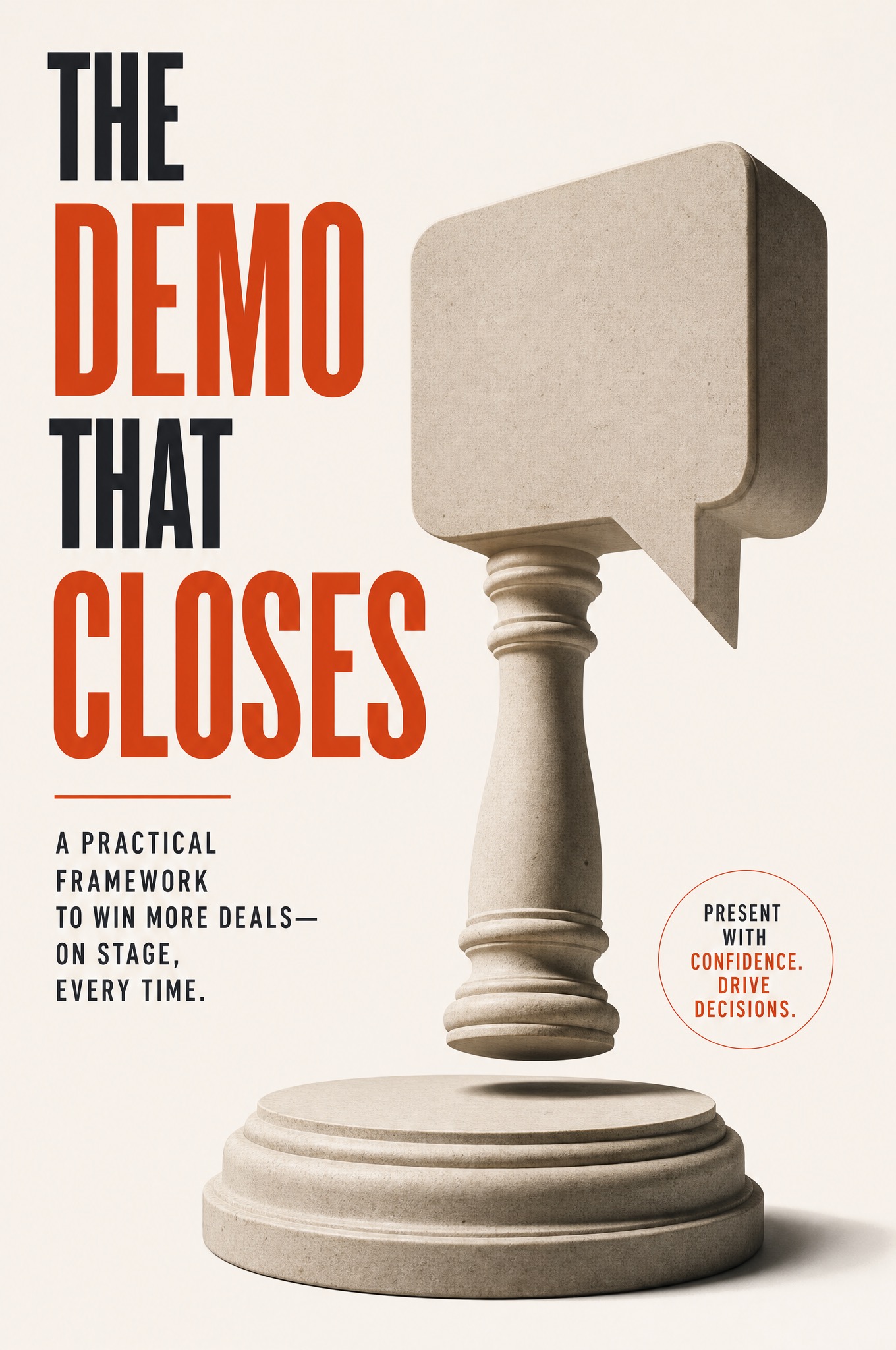
You'll diagnose the failure pattern behind feature-dump demos and run the demo as a qualifying, relationship-building, objection-handling moment instead of a product tour. Score your last three demos against a "show, don't tell" rubric and pinpoint exactly where attention and trust leaked away.
Most sellers run their twentieth demo the same way they ran their first. The slides got prettier and the patter got smoother, but the process underneath is still improvised — what you remember under pressure, plus whatever the last call taught you, minus whatever you've since forgotten.
You wrote "the VP of operations probably cares about onboarding time" because that's what VPs of operations usually care about. Probably and usually lose deals.
Your storyline survived the storyboard. Then, around the moment you show the screen that proves your claim, a buyer leans back: "This looks like the tool we already pay for," or "What happens to our data when it leaves our network?".
Look at your pipeline: eleven open deals, and you're one person. Three are enterprise opportunities where a live demo earns its keep.
The walkthrough went well. The economic buyer nodded at the right moments, the technical evaluator stopped hunting for holes around minute twenty, and someone said "this is interesting" without sarcasm.
Before you design a single screen, fill this out from your notes, your CRM, and your discovery calls. Any row you can't answer is your most valuable pre-demo question — ask it before you present, not during. ACCOUNT: __________ DEMO DATE: __________ 1. Trigger event — why are they looking now, this quarter?
Run this before you move to storyline work later in the guide. If you cannot check a box, you have a research gap, which a later chapter on AI-assisted research is.
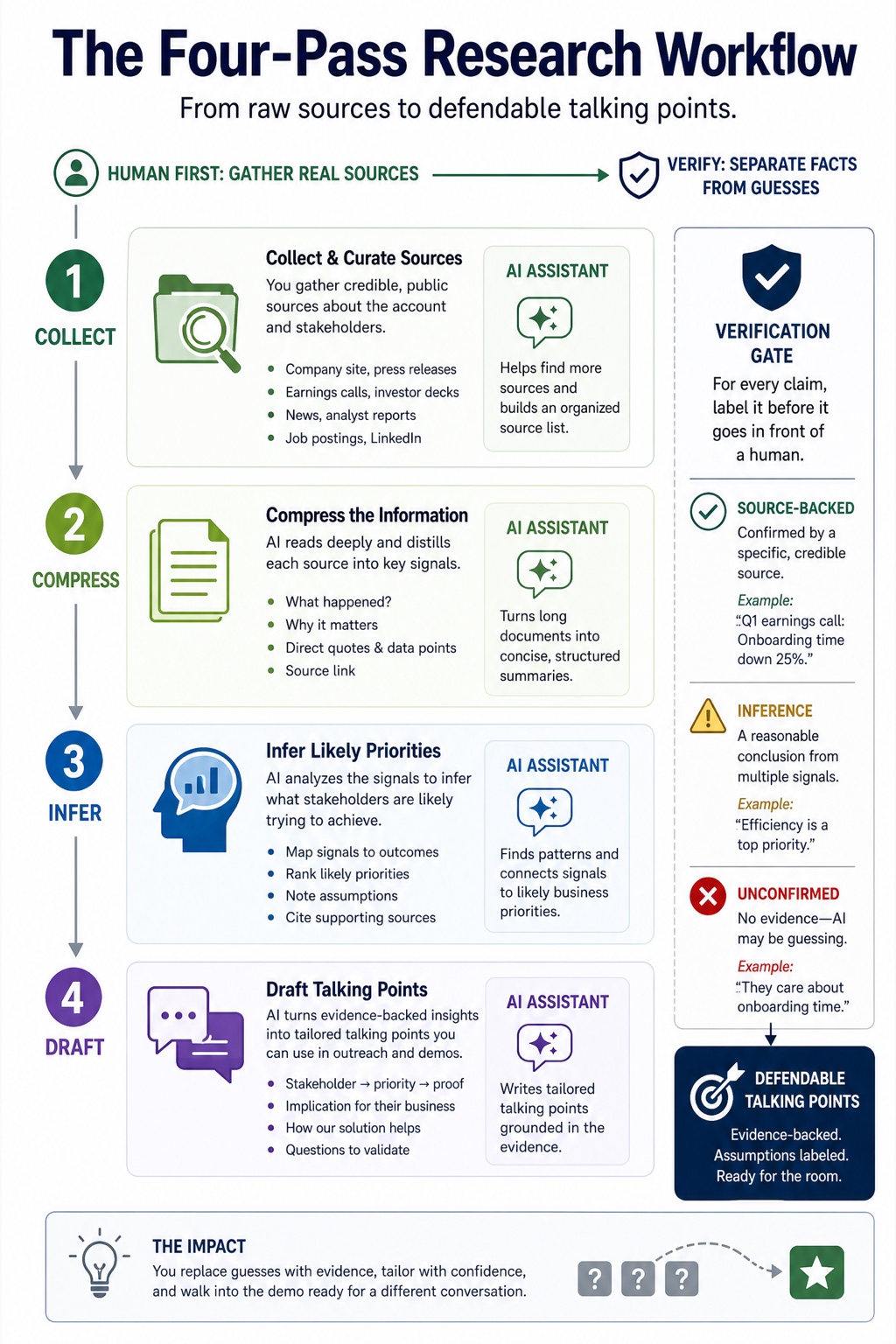
Pick one real upcoming demo and run all four passes on it now, not later. Gather at least three real sources and paste them in — no recall-only research. Run the compression prompt and read the Gaps section first; run the inference prompt and flag every priority marked "no evidence." Draft talking points for your top two priorities.
Before any AI-generated fact enters your stakeholder-to-outcome grid, run it through this gate.
EPUB, PDF, and HTML are included so the book can work on an e-reader, as a designed copy, or as a searchable desk reference.
For e-readers and reading apps.
The designed edition with diagrams and layouts intact.
Searchable, copy-pasteable, and practical as a reference.
Yes. You get the complete edition, including the chapter sequence and internal materials described on this page.
EPUB, PDF, and HTML are included so you can read on an e-reader, keep a designed copy, or use the searchable browser version.
Because this is an instant digital download, broad change-of-mind refunds are not offered after the files have been accessed. Refund requests are reviewed within 7 days for duplicate purchases, accidental purchases before access, access failures we cannot fix, wrong files, corrupted files, or pages that materially misdescribe the book.