Two systems, one steering wheel
You learn to spot the two systems competing for the wheel, so when your phone lights up mid-task with a single grey banner and no sound, you know which one just grabbed control.
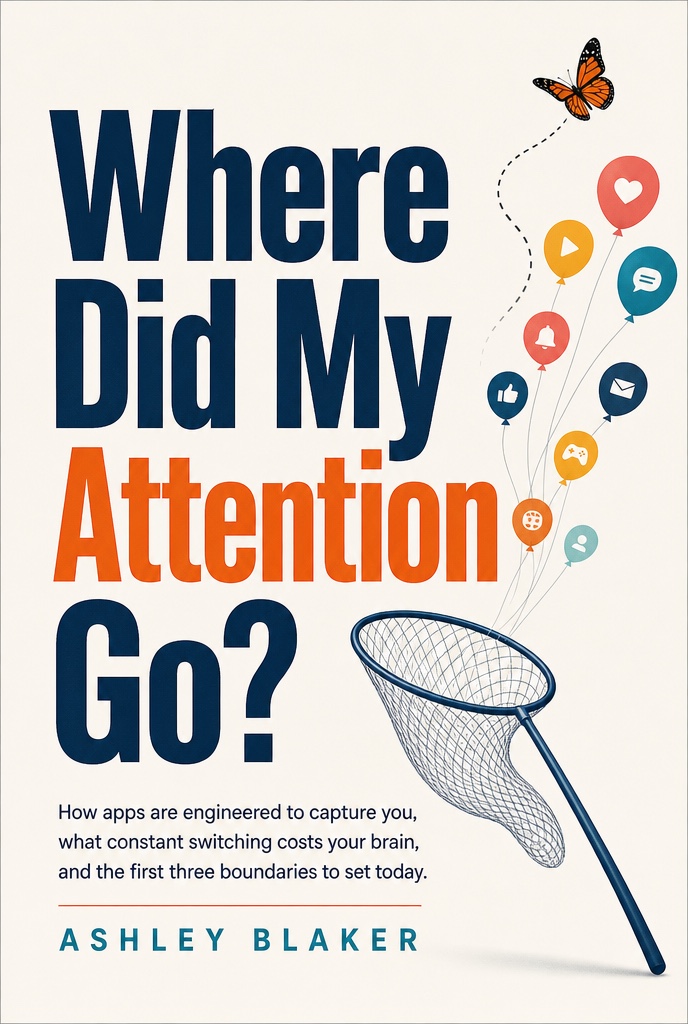
How apps are engineered to capture you, what constant switching costs your brain, and the first three boundaries to set today.
You pick up a book you loved a few years ago and read one page — and absorb nothing. If that's familiar, you're not lazy and your memory is fine.
Picture the boundary working exactly as planned. Notifications are off, your phone sleeps in another room overnight, the worst app is logged out and buried three taps deep. Then a deadline hits.
You learn to spot the two systems competing for the wheel, so when your phone lights up mid-task with a single grey banner and no sound, you know which one just grabbed control.
You see your own phone clearly — the red badges, the little numbers on every icon, the store telling you three apps need updating — and recognize the slot machine behind each pull.
You make the change that actually shifts your days: not a phone detox, not a vague vow to "use technology less," not deleting everything in guilt at 11 p.m. and reinstalling it by lunch.
You sit down to write an email that should take four minutes, and when your phone lights up halfway through the second sentence, you can finally name the cost you used to pay without noticing.
The "Brain Drain" study by Adrian Ward and colleagues, published in the Journal of the Association for Consumer Research in 2017, found that the mere presence of a smartphone on the desk lowers cognitive performance — even when it's silent, face-down, and switched off. It doesn't ring. It doesn't buzz.
For a single day, keep a tally on paper or in a notes app. Each time your focus jumps to a screen, make a mark and jot one word for what pulled it — a person, an app, boredom, a real task. Don't change anything yet; just gather data on which driver is steering, then read the marks at day's end.
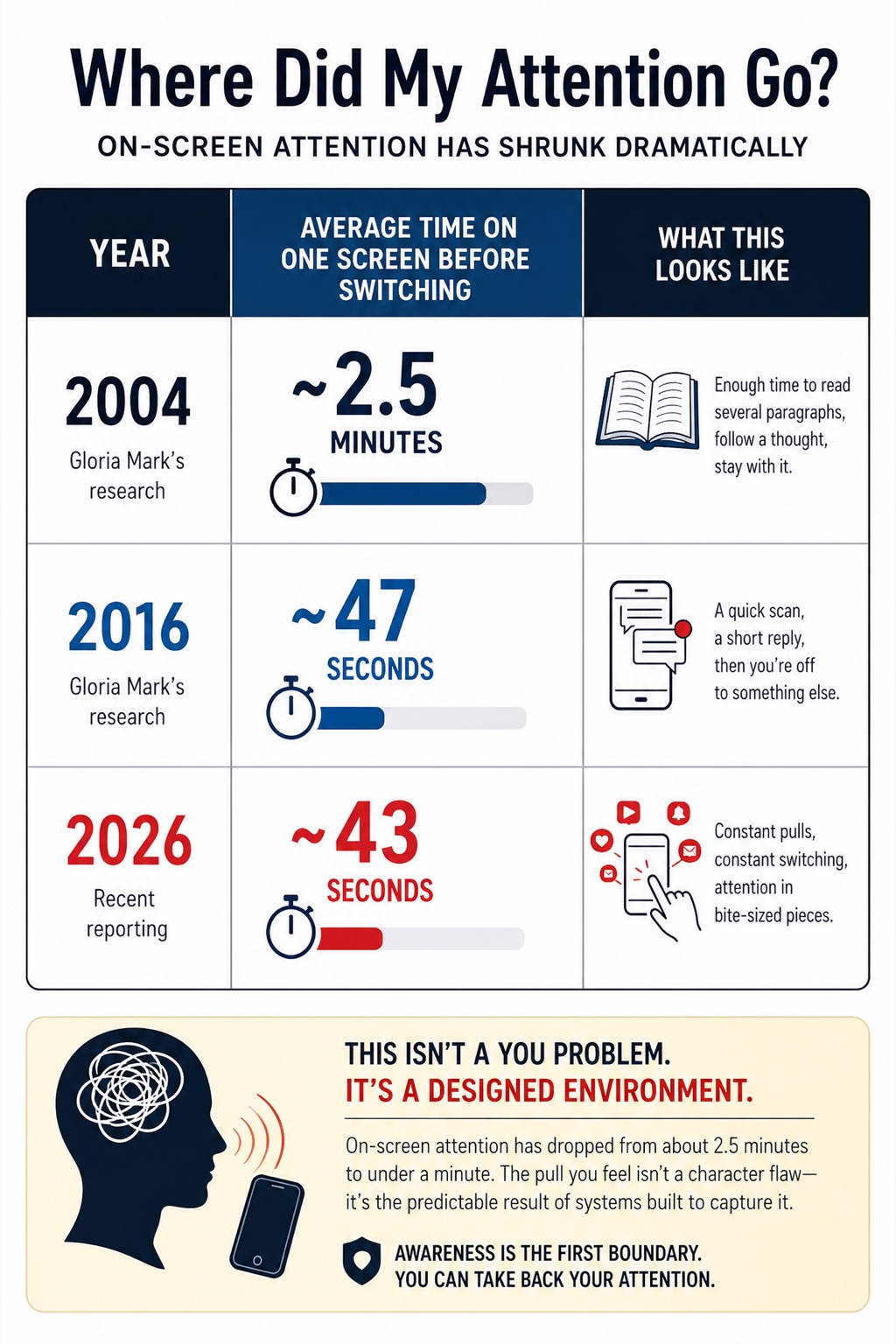
Go back to that grey banner on your desk. Nothing rang, you weren't even expecting a message, yet your eyes moved. That's the orienting response doing exactly what it evolved to do, triggered by a stimulus engineered to trigger it.
Pick the app you open most without thinking, then run it through the five patterns like a checklist. Does refreshing or opening it give unpredictable payoffs (variable rewards)? Can you scroll it forever with no natural end (infinite scroll)? Does the next thing start playing on its own?
EPUB, PDF, and HTML are included so the book can work on an e-reader, as a designed copy, or as a searchable desk reference.
For e-readers and reading apps.
The designed edition with diagrams and layouts intact.
Searchable, copy-pasteable, and practical as a reference.
Yes. You get the complete edition, including the chapter sequence and internal materials described on this page.
EPUB, PDF, and HTML are included so you can read on an e-reader, keep a designed copy, or use the searchable browser version.
Because this is an instant digital download, broad change-of-mind refunds are not offered after the files have been accessed. Refund requests are reviewed within 7 days for duplicate purchases, accidental purchases before access, access failures we cannot fix, wrong files, corrupted files, or pages that materially misdescribe the book.